It is officially the most popular real estate question of the year: "Should I buy a home now or wait?" If you are looking at properties here in Idaho, it is easy to see why you might be

Dated: August 11 2026
Views: 331
Self-Employed and Want to Buy a Home? You May Have More Mortgage Options Than You Think
If you're self-employed, own a business, work as a 1099 contractor, or don't receive a traditional W-2, you may have wondered:
“Can I even qualify for a mortgage?”
The answer is yes, you may have options.
Being self-employed doesn't automatically prevent you from buying a home. The challenge is that lenders may evaluate your income differently than they would for someone with a traditional W-2 job.

Depending on the loan program and your individual circumstances, a lender may ask for things such as:
Traditional conventional financing may be an option for many self-employed borrowers. However, the way your income is calculated can be different because business deductions and expenses can affect the income reported on your tax returns.
That's why talking to a lender before you start shopping is so important.
One option some self-employed buyers may want to ask their lender about is a bank statement mortgage.
Rather than relying solely on taxable income from tax returns, certain non-QM loan programs can use documented deposits shown on bank statements to help determine qualifying income.
Some programs may look at 12 or 24 months of bank statements, depending on the lender and program requirements.
This can potentially be helpful for business owners whose tax returns don't tell the entire story of their cash flow.
Depending on your situation, a lender may also discuss options such as:
Conventional loans — Self-employed borrowers can qualify for conventional financing when they meet the applicable income, credit, debt and documentation requirements.
Bank statement loans — Certain programs use documented bank deposits as part of the income qualification process.
P&L-based programs — Some lenders offer programs that may use an acceptable profit-and-loss statement as part of the income documentation.
DSCR loans — If you're purchasing an investment property, a debt-service-coverage-ratio loan may evaluate the property's income rather than relying primarily on your personal employment income.
The important thing to remember is that not every program is right for every buyer.
Your lender should look at your individual circumstances and determine what programs you may qualify for.
This is probably the biggest piece of advice I can give a self-employed buyer:
Don't wait until you find your dream home to start getting your financial paperwork together.
If buying a home is a goal for the next year or two, start preparing now.
Keep copies of your tax returns, bank statements, business records and other financial documentation.
If you have business accounts, keep your business income and expenses organized and easily traceable.
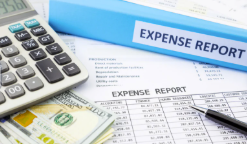
Some mortgage programs look at 12 or 24 months of financial activity, while other programs may require a longer history of self-employment or tax documentation.
The sooner you start keeping clean, consistent records, the easier the mortgage process can be.
If you're thinking about changing how you pay yourself, restructuring your business, making a large purchase, moving money between accounts or making another significant financial change, talk to your lender first.
What makes sense for your business isn't always what makes sense for mortgage qualification.
This is one of the biggest concerns I hear from self-employed buyers.
You might think:
“I don't show much taxable income because I have a lot of business deductions, so I won't qualify.”
Don't automatically count yourself out.
Different mortgage programs calculate qualifying income differently, and your lender can help determine whether your financial situation fits a particular program.
If you're self-employed and thinking about buying a home in Idaho, get qualified before you start house hunting.
A good lender can review your income, credit, debts, assets, business history and documentation and help you understand what programs may be available.
Then you can shop for a home with a much better understanding of your budget.
And as your Realtor®, that's where I come in.
My goal isn't just to open doors and show you houses. I want you to understand the process before you ever walk through the first one.
If you're self-employed, 1099, a business owner or simply unsure whether your income will qualify, let's start the conversation.
You might be surprised by what's possible.
Ready to talk about buying a home in Twin Falls or the Magic Valley? Contact me and let's start with the first step: getting you qualified.
Mortgage guidelines and loan programs can change, and eligibility varies by borrower and lender. This article is for general educational purposes and is not a commitment to lend or financial advice. Always consult a qualified mortgage professional regarding your specific situation.

Cynthia Chugg has been a long-time resident of the Magic Valley; born and raised here, and is so excited to be turning her community focus towards real estate. With a passion for service, Cynthia is r....
It is officially the most popular real estate question of the year: "Should I buy a home now or wait?" If you are looking at properties here in Idaho, it is easy to see why you might be
Property rights. Housing choices. Land use. Taxes. These changes matter to Idaho homeowners, Powered by Realtors®One of the things I am most proud of about being an Idaho REALTOR® is that my
Self-Employed and Want to Buy a Home? You May Have More Mortgage Options Than You ThinkIf you're self-employed, own a business, work as a 1099 contractor, or don't receive a traditional W-2, you may
Idaho Housing Now Allows Owner-Occupied 2–4 Unit PropertiesCould buying a duplex, triplex, or fourplex in Idaho be an option for you? A new Idaho Housing and Finance Association (IHFA) program
 Information provided by Intermountain MLS (IMLS) is deemed reliable but not guaranteed.
The data relating to real estate for sale on this website comes in part from the Internet Data Exchange program of the Intermountain MLS system. Real estate listings held by brokerage firms other than Silvercreek Realty Group - Twin Falls Office are marked with the IDX icon.
IDX information is provided exclusively for consumer's personal, non-commercial use, that it may not be used for any purpose other
than to identify prospective properties consumers may be interested in purchasing. IMLS does not assume any liability for missing or inaccurate data September 28, 2026 8:07 PM UTCd
Show More...
Information provided by Intermountain MLS (IMLS) is deemed reliable but not guaranteed.
The data relating to real estate for sale on this website comes in part from the Internet Data Exchange program of the Intermountain MLS system. Real estate listings held by brokerage firms other than Silvercreek Realty Group - Twin Falls Office are marked with the IDX icon.
IDX information is provided exclusively for consumer's personal, non-commercial use, that it may not be used for any purpose other
than to identify prospective properties consumers may be interested in purchasing. IMLS does not assume any liability for missing or inaccurate data September 28, 2026 8:07 PM UTCd
Show More...
